


Contents
- What is content marketing?
- What’s the purpose of content marketing?
- Content marketing can help you achieve:
- What types of content marketing are there?
- Seo
- Inbound marketing
- Native marketing
- Social media
- Email marketing
- Examples of content marketing
- How do you do content marketing?
- A content marketing strategy is essential for success
- How do you succeed with content marketing in 2026?
- Overrated and underrated in content marketing 2026
- The most common mistakes
- The agency mistakes that are dragging your content down
- Content marketing trends
- How can topdog help with your content marketing?
- Services topdog offers in content marketing:
- What do topdog’s content marketing services deliver?
- Content marketing + seo = a winning combination!
- Tips: how to succeed with content marketing
- Examples of content marketing
- Ikea ideas
- Elgiganten’s buying guides
- Lensway – optikguiden
- Postnord portal
- Portsgroup, now abion
- Why should you hire topdog for your content marketing?
What is content marketing?
Content marketing is about building trust by giving your audience content they actually want, rather than pitching to them directly. It’s a natural fit for how we live online today: we consume vast amounts of information and choose for ourselves which content and messages we engage with. Get it right, and your brand becomes a source people return to — not just a company they happened to stumble across.
The difference from traditional marketing is that the content doesn’t explicitly sell the brand. Instead, it sparks curiosity about your products or services by genuinely being useful — something to learn from, solve a problem with, or draw inspiration from. Whatever you call it, content marketing or “innehållsmarknadsföring”, the principle is the same: you serve your audience first, and trust follows as a result.
What’s the purpose of content marketing?
The purpose of content marketing is to build trust in a brand by answering the questions your users are actually asking. That’s a departure from traditional marketing, which is built around presenting a brand or product in the best possible light. When you start from what the customer genuinely wants to know, rather than what the company wants to say, your brand ends up in a completely different position. If customers associate your brand with expertise in your field, they’re far more likely to choose your products when it’s time to buy.
Content marketing can help you achieve:
- lead generation
- more conversions and sales
- stronger customer relationships
- greater brand awareness
- more powerful messaging
- fewer negative associations with your brand
- more links from other websites
- content for social media and email campaigns
- a smoother customer journey.
What types of content marketing are there?
There are several ways to approach content marketing, but they all share one thing in common: they need content. Well-produced, high-quality content is essential if you want to reap the benefits, though the right approach depends on the product or service you offer. Here are some of the most common methods:
SEO
SEO is about optimising your website so Google’s algorithms can interpret and understand your content more easily. That helps you rank higher and reach more potential customers. We cover the full relationship between SEO and content marketing in depth in our guide to SEO content marketing.
Inbound marketing
Inbound marketing attracts customers by meeting them where they already are in their online research and buying journey — from that first search for information right through to the decision to buy a product or service. It’s closely related to content marketing. The difference is that content marketing focuses mainly on the content itself, while inbound marketing takes a broader view in which content plays a key role.
Native marketing
Native advertising is a form of content marketing where content is published in an editorial context, so it feels natural to the reader rather than like an advert. We break down the difference between native and content marketing in detail.
Social media
Using social media as part of your content marketing is an effective way to engage your audience. What sets social media content apart is that you need to tailor it to the specific platform to get the best results.
Email marketing
In the hunt for new customers, it’s easy to neglect the ones you already have. Email marketing lets you share content, offer customers personalised deals, and encourage them to engage with your brand in various ways.
Examples of content marketing
Want to see what content marketing looks like in practice? Further down the page, we walk through several strong examples, including how Ikea Ideas has built up more than 3,400 pages of interior design tips, and how Elgiganten’s buying guides both drive traffic and cut down on returns. The principles stay the same whatever you call it, content marketing or “innehållsmarknadsföring”: relevant content that solves a genuine need, published where your audience is already looking for answers.
How do you do content marketing?
At its core, content marketing is about identifying what your audience genuinely needs help with, then building content that solves it. It’s a step-by-step process, from setting goals and analysing your audience through to production, publishing and follow-up.
Below, we walk through the eight steps to successful content marketing.
1. Define your goals
First, decide what you want your content marketing to achieve. That might mean driving more traffic to your website, growing sales, or strengthening your brand.
2. Analyse your audience
Who’s your primary audience? To reach them, you’ll need an audience analysis that uncovers where they are in life, what they need, and what they themselves consider valuable. We explain how to uncover the search intent behind this in our guide to search intent.
3. Set your KPIs
KPIs, or key performance indicators, are the metrics you use to track and measure how well your content marketing is performing. For KPIs to be effective, they need to reflect both the company’s goals and what matters to the audience.
4. Choose channels based on your audience
When deciding where to publish your content, it’s crucial that you choose the channels your audience actually prefers. In many cases, you’ll need more than one channel to get sufficient reach.
5. Budget
Once you’ve defined your goals and the activities required to reach them, you can put together a realistic, sustainable budget.
6. Planning
Draw up a plan for what needs producing and when it should go live. Without deadlines, it’s all too easy for a project to fizzle out.
7. Content production
Once you start producing content, it’s important to scale up production as quickly as possible to see results. Speed isn’t usually the biggest challenge, though. Maintaining consistent quality, the right skills and a process that actually holds up over time is just as often what causes content marketing efforts to stall. This is where an SEO agency can make a real difference — not just by writing copy, but by tying keyword research, structure and production pace together into a process that lasts. In practice, that means faster results, fewer costly mistakes, and more of your own time freed up for strategy and business rather than day-to-day production. Thinking about bringing in help? Here’s how to choose the right content marketing agency.
8. Distribute your content
The final step is publishing your content across your chosen channels. Paid advertising is often a good option, whichever platform you use. That said, SEO is the option that delivers the best long-term value for money, even if it can be tricky to get right without the proper expertise.
A content marketing strategy is essential for success
A content marketing strategy is what separates efforts that deliver results from those that fizzle out. Without one, it’s easy to pour time and resources into activities that don’t move the needle. With a strategy in place, you know from the outset what your audience wants, what the business is trying to achieve, and which content needs producing and publishing to get there. Every activity can also be tied back to your long-term business goals.
How do you succeed with content marketing in 2026?
The fundamentals above haven’t changed. What has changed is search behaviour. In 2026, Google’s AI Overviews answer an ever-growing share of queries directly in the search results, meaning many users get their answer without ever clicking through to a website. This is known as zero-click search, and it’s already a reality.
That doesn’t mean content marketing matters less. If anything, it matters more. Whether or not you’re visible at all now comes down to the content Google and AI systems choose to surface, click or no click.
Stop churning out generic top-of-funnel content. Focus on what nobody else can copy.
“Stop producing top-of-funnel content that AI tools already answer better. Generic ‘what is X’ articles just duplicate what’s already out there and rack up maintenance debt. Focus instead on what nobody else can copy: your own research, concrete case studies and data tied specifically to your brand. One exception is basic e-commerce category pages, which are still needed to bring products together. It’s just as important to become a clear ‘entity’ in your field: AI tools understand the world through topics rather than individual pages, so your brand needs to be clearly linked to your expertise.”
– Christian Rudolf, CEO, Topdog
In practice, this means generic content like “What is SEO?” or “How do you wash a duvet jacket?” is losing its value fast. AI tools already provide these answers, so duplicating them just racks up maintenance debt. What builds genuine visibility instead is content that’s impossible to copy: your own research, concrete customer case studies, product data and opinions clearly tied to your brand. Basic category pages, such as a collection page for “backpacks” on an e-commerce site, are still worthwhile — but most generic “informational content” no longer is.
Overrated and underrated in content marketing 2026
Now that AI has changed the playing field almost overnight, plenty of people are shooting from the hip with their recommendations — with mixed results. Here’s my take on what’s genuinely overrated and underrated in content marketing right now.
Overrated: writing for search engines and AI bots instead of people. Content optimised for machines but that reads awkwardly or unnaturally to a human will backfire as search engines get better at filtering it out.
Underrated: content created together with your customers — reviews, case studies, interviews and joint activities. It’s unique, credible and impossible to copy, which earns it a lasting place in both Google’s results and AI tools’ answers.
The most common mistakes
The most common mistakes we see are:
- Too much content, no strategy. This often means a company’s own pages end up competing with each other in the search results instead of reinforcing one another.
- No presence beyond your own site. Many companies overlook platforms like YouTube, LinkedIn, Reddit and industry-specific forums — all of which are crucial for wider reach.
- Not making the most of customer content. Reviews, customer case studies, interviews and press releases produced together with customers make for unique, credible content that’s rarely used to its full potential.
- “Chunking”. A writing style optimised for machines that’s almost unreadable for people. It damages the user experience and is rarely worth the marginal SEO gain.
The agency mistakes that are dragging your content down
It’s not only companies that make these mistakes. Many content agencies fall into the trap of focusing too heavily on surface polish, “stories” and brand narrative, often smoothed over by PR departments, rather than content that’s actually valuable to the user.
“Too many companies build their brand in the boardroom instead of starting from what users actually want to know. The content that truly stands the test of time is what no competitor can copy: real customer case studies, reviews and interviews — not polished brand stories.”
– Christian Rudolf, CEO, Topdog
(read our guide to common content marketing mistakes for the full list)
Content marketing trends
Content marketing keeps evolving fast. AI tools are driving demand for new types of content, such as product reviews and detailed information about use cases, side effects and limitations, simply because that’s the kind of data these tools need to give good answers.
Many companies are also sitting on significant content debt: old material that needs regular updating, improving or pruning to stay relevant in a digital landscape that keeps shifting.
It’s also about where content gets published. Publishing on your own site alone is no longer enough. Content marketing needs to reach external, authoritative and relevant platforms — media sites, PR, YouTube, LinkedIn, Reddit and industry forums — and it needs tailoring to each channel rather than simply being recycled.
Want to see more trends and what they mean for your strategy? We cover them in detail in our guide to content marketing trends.
How can Topdog help with your content marketing?
Topdog’s main goal is to generate real business value through content marketing — whether that’s a single, targeted project or a much larger initiative. What sets us apart as a content agency is the sheer delivery expertise of our SEO consultants. Execution, not strategy, is where most content marketing efforts in the market fall down.
Services Topdog offers in content marketing:
Goal-setting
It’s not always easy to know what counts as a realistic goal if you haven’t run content marketing projects before. We help answer your questions about what’s achievable given your specific circumstances.
KPIs
Which metrics do you need to track to judge how well an activity has performed? We make sure you draw the right conclusions from your data, so you know exactly what to do next.
Content marketing strategy
Need help putting together a strategy for your content marketing? With Topdog, you get a bespoke strategy that’s built on data and aligned with your long-term business goals.
Content analysis across channels
There’s always a reason content underperforms, and it’s usually easy enough to track down. Through a content audit, we help identify the gaps and provide you with a clear action plan to address them.
Evaluating and streamlining content processes
How can you make your content production more efficient and more effective? We evaluate your processes and give you practical, actionable advice on how to move forward.
Paid advertising & native advertising
Want your advertising to reach a wider audience? Topdog produces adverts that drive more traffic to your site and lead to more conversions.
Content production
We take on larger projects, helping you scale up production of high-quality SEO copy quickly, even within B2B content marketing. That means Google gets to grips with why your site is relevant much faster, and starts rewarding it with higher rankings sooner.
Project management
Able to produce the content yourselves but need help structuring the work for maximum efficiency? Whatever the scope of the project, Topdog can bring expertise and project management to the table.
What do Topdog’s content marketing services deliver?
- more repeat visitors to your website
- scaled-up content production
- confidence that your content performs well in Google
- more efficient processes
- more conversions and increased sales.
Content marketing + SEO = a winning combination!
Creating and improving content with Google’s algorithms in mind, in other words SEO, is still one of the most effective ways to drive more traffic to a website, while also building a stronger relationship between users and the brand. We cover the full relationship, including why SEO and content marketing work so well together, in two in-depth guides: SEO & content marketing and why content marketing matters for your SEO.
Tips: how to succeed with content marketing
Over the years, Topdog has driven millions of clicks from Google to our clients through SEO and content marketing.
Here’s how you succeed:
1. Think about what searchers are asking
Every Google search hides a question. Understand what people are actually asking, and you can shape content that gives them the right answer.
2. Work out user intent
What do searchers actually need? Are they looking to buy, to learn, or to compare their options? We explain how to work this out in our guide to search intent.
3. Structure your content
Getting the structure right is essential to successful content marketing. Your subheadings should help readers navigate the page — each one can reflect one of the searcher’s questions, with the answer following in the paragraph beneath it. Good structure also makes it easy for users to scroll through and quickly find what they need.
4. Use technology that supports your content
Succeeding with content marketing also takes the right technical foundation. Fast page load times are one example. Another is using technical features to take up more space and gain better visibility in Google’s results.
5. Package and design your content
Success often takes more than just text. Packaging, design and branding all matter for making your content appealing and credible.
6. Move visitors further along the customer journey
Ranking well and attracting plenty of visitors is rarely an end in itself. You also need to build in some way of moving visitors a step closer to becoming customers. That doesn’t necessarily mean an immediate purchase — signing up to a newsletter counts too.
Examples of content marketing
Ikea Ideas
Ikea runs a section of its website called Ikea Ideas, featuring more than 3,400 pages of interior design tips, home solutions and DIY projects. Beyond serving as inspiration for anyone looking to refresh their home, the articles link directly to the products they feature.

Result: around 75,000 visitors from Google every month, and rising

Beyond the traffic, the content generates ongoing attention from media, bloggers and the wider web. The chart below shows how other sites link to Ikea’s content over time.

Elgiganten’s buying guides
Elgiganten has created buying guides that help customers choose products suited to their needs and lifestyle. Beyond making people more likely to buy Elgiganten’s products, the guides also reduce returns, since customers get support throughout the buying process.

Result: Elgiganten’s buying guides receive around 120,000 clicks from Google every month

Elgiganten’s guide is popular too. As the chart below shows, it continues to pick up links from other sites — a clear sign the content is valued.
Lensway – Optikguiden
Lensway runs a blog called Optikguiden, where they answer questions about eyes and eyewear. The content builds trust in the Lensway brand while giving them a way to promote their own products — without ever feeling pushy.

Unfortunately, Optikguiden’s site structure makes it difficult to measure with external tools, so you’ll have to take Topdog’s word for it: it’s good.
PostNord Portal
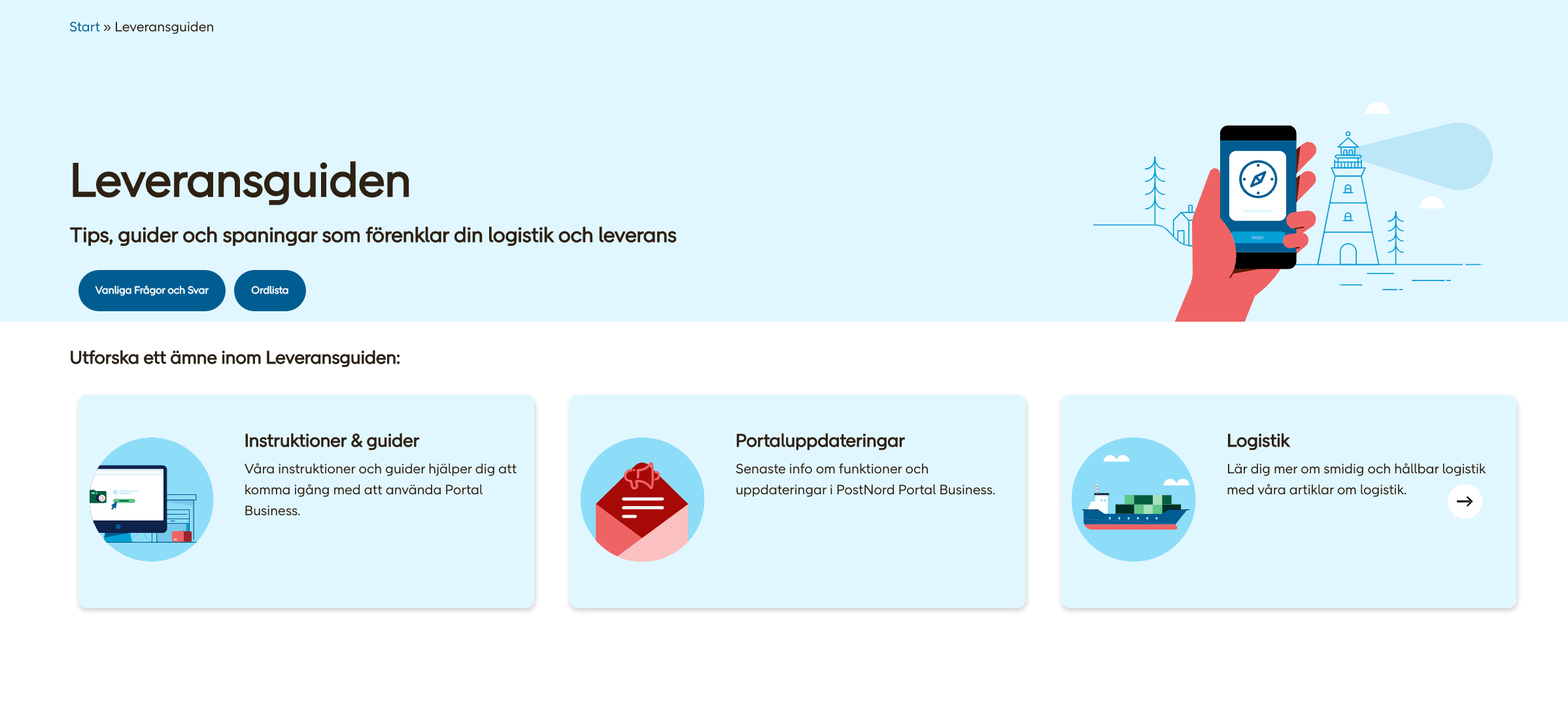
Topdog ran a project for PostNord, producing landing pages and content for their Portal Business platform, under a concept we named Leveransguiden (“The Delivery Guide”). We built a substantial content section answering every question a business might have about sending or receiving parcels — covering customs, logistics and functional digital processes. This lowers the barrier for anyone considering PostNord’s digital services. What makes this project stand out is that it’s attracted significant traffic despite operating in the B2B space. The nature of B2B SEO is that search volumes are often modest, but every visit tends to be highly valuable.
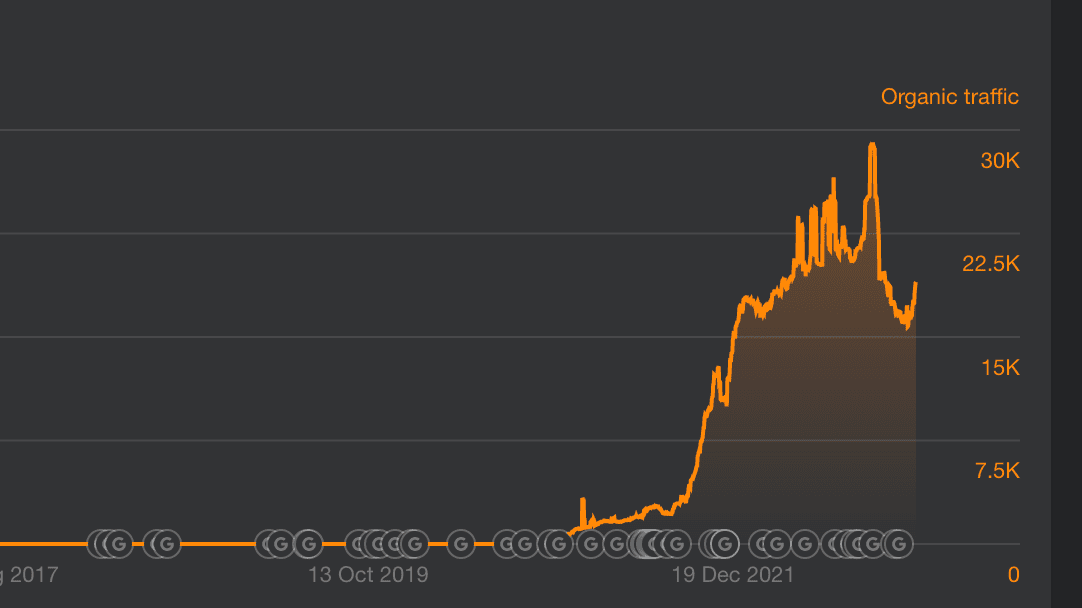
The impact in terms of relevant traffic has been substantial. The dip in the chart reflects PostNord’s decision to move some content over to Postnord.se
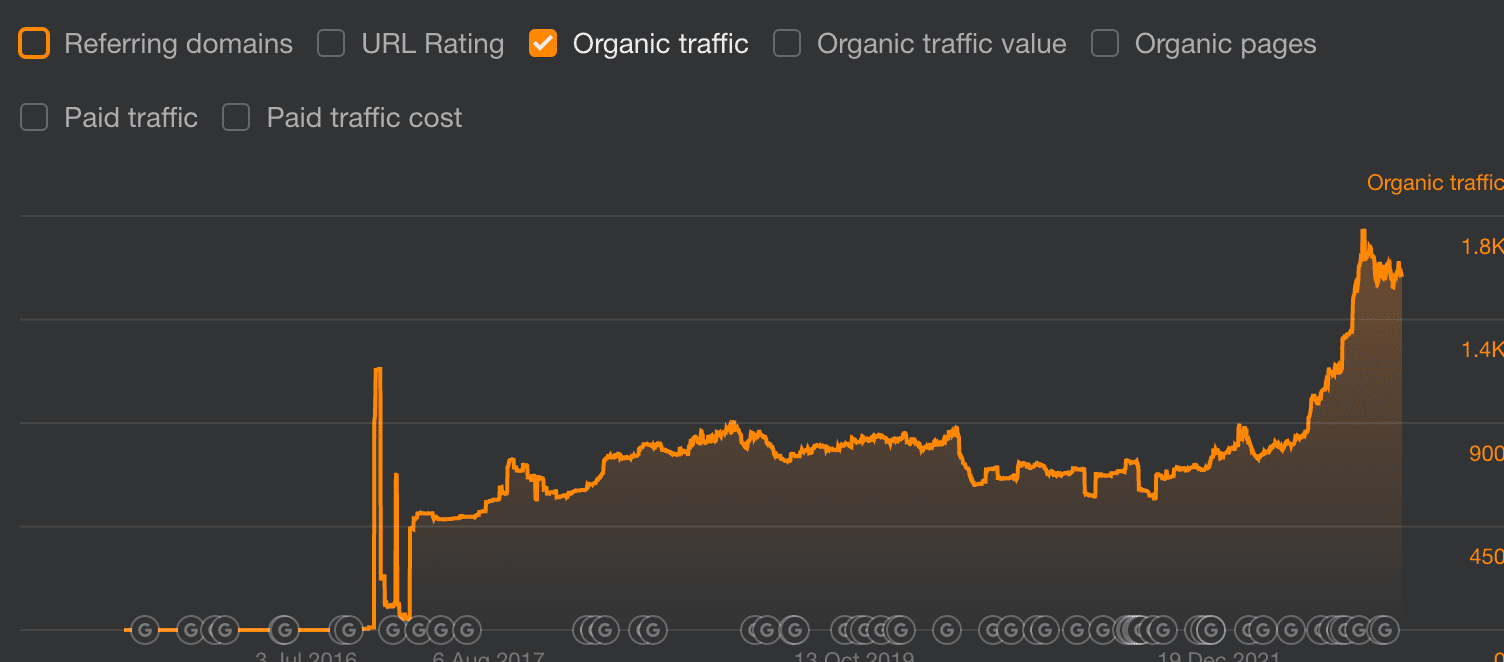
The wider web has responded well to the content too. The chart below shows how many sites have linked to Leveransguiden over time.

Portsgroup, now Abion
Abion is a B2B company in brand security that provides businesses with bespoke security solutions, brand protection and trademark registration. Since companies rarely know in advance exactly what protection they need, the content on Portsgroup’s website plays a key role throughout the buying process. Buyers go through a longer customer journey, and content matters at every stage of it. Topdog has helped Portsgroup with both content production and SEO.
Result: several hundred extra clicks every month
Why should you hire Topdog for your Content Marketing?
We hope this article has given you a clearer picture of what content marketing is and how it can strengthen your marketing strategy. If you feel you need a hand putting content marketing into practice on your website, Topdog is an excellent choice.